


BMW M3 Body Kit: The Complete Deep Guide for Every Owner Who Wants More
Updated: Jul 13
BMW M3 body kit is a search that brings together two completely different types of people. The first type wants to make their M3 look more aggressive. They want wider arches, a deeper front splitter, a proper diffuser and a wing that tells the world this is not a standard saloon. The second type wants to back up that aggressive look with real aerodynamic function, because the M3 is a serious performance car and a properly engineered body kit can make it faster and more stable at speed.
Both motivations are completely valid. The BMW M3 is one of the most iconic performance saloons ever built and it has been a canvas for serious modification work since the E30 first appeared in the 1980s. Every generation has attracted talented kit manufacturers and serious owners who pushed the design further than the factory did. This guide covers everything about BMW M3 body kits in full detail. Every component, every material, every manufacturer, every generation and every step of the installation process.
Squadra Nostra is Miami's specialist in exotic and performance car service. The team brings over 15 years of combined hands-on experience with BMW M vehicles and other high-performance cars. The guidance in this blog comes from real experience fitting, maintaining and advising on body kit projects, not from reading other people's articles. If you own an M3 in Miami and you are planning a body kit build, this guide gives you everything you need to make the right decisions.
TABLE OF CONTENTS
FAQ 1-12. Frequently Asked Questions

1. What Is a BMW M3 Body Kit and Why Does It Matter
A body kit is a set of exterior components that change the shape and visual profile of a car. On a BMW M3 this means additions or replacements to the front bumper section, the side skirts, the rear bumper and diffuser area and in many builds a rear wing or spoiler. Some kits also add wider arch extensions at the front and rear fenders to accommodate wider wheel and tyre packages.
A body kit matters for several reasons that go beyond how the car looks. On a high performance car like the M3 a correctly engineered body kit changes how air flows around and underneath the car at speed. More downforce at the front keeps the nose planted during high speed cornering and braking. A proper rear diffuser reduces drag and lift at the back of the car. A correctly positioned wing generates rear downforce that balances the front. These are not theoretical benefits. On a car that is regularly driven at high speed or used on a track circuit they translate into a car that is measurably faster and more confidence-inspiring at the limit.
Even for owners who drive their M3 purely on the road, a body kit changes how the car communicates visually. The M3 is already a purposeful looking car but a well chosen body kit gives it a presence that stands apart from every other M3 on the street.
Squadra Nostra Perspective The BMW M3 is one of the most satisfying body kit projects we work on because the factory car gives you a genuinely capable foundation. You are not trying to make a slow car look fast. You are extending a fast car's visual and in many cases functional capabilities further. When that is done with quality parts and correct installation the result is something genuinely special. |
2. Why the BMW M3 Is Already a Different Starting Point
The BMW M3 is not a standard 3 Series. Every M3 generation has been developed from a different engineering base than the standard car. The body is wider. The wheel arches are flared to accommodate wider track dimensions. The front bumper has larger air intakes for cooling the more powerful engine and in many generations the brake cooling ducts as well. The front and rear subframes are different from the standard 3 Series. The aerodynamic profile of the car was already considered during development.
This matters for body kit planning because you are starting from a car that already has wider arches, already has a more aggressive front end and already has some aerodynamic thought in its design. A body kit on an M3 needs to complement and extend this starting point rather than simply fighting against a box-shaped ordinary saloon. The components you choose should feel like a natural evolution of what BMW M GmbH started with.
The current G80 generation M3 in particular has a very specific aerodynamic architecture. The large kidney grille opening at the front, the functional vents in the front wings, the carbon fibre roof on CS and Competition M xDrive models and the active aerodynamic diffuser on the CS all create a starting point that aftermarket components need to work around carefully. The G80 M3 has more factory aerodynamic function built in than any previous M3 generation and body kit choices for this car need to respect and extend that function rather than replacing it randomly.
3. What Goes Into a BMW M3 Body Kit: Every Component Explained
Understanding what each part of a body kit does is the foundation of making good decisions about what to include in your build. A complete BMW M3 body kit build can include some or all of the following components.
Front Bumper or Front Bumper Extension
The front bumper is the most visible component from head-on. A replacement front bumper changes the entire face of the car. A front bumper extension or lip is a less invasive option that adds to the lower section of the factory bumper. The most aggressive options feature larger central air splitter sections, additional canard winglets at the outer corners and reshaped air intake openings that either feed more air to the intercoolers or route air to the front brake cooling ducts more efficiently.
Front Splitter
A front splitter is the horizontal flat section that extends forward from the lower edge of the front bumper. Its function is aerodynamic. Air travelling under the car reaches higher speeds than air travelling over the car and is therefore at lower pressure. The splitter creates a boundary between the high pressure air above and the lower pressure air below, generating a downforce effect at the front axle. The further the splitter extends forward and the larger its surface area the more downforce it generates at a given speed. For a road driven M3 a moderate splitter depth that balances function with ground clearance on real roads is the right choice.
Canards
Canards are the small vertical fins mounted at the corners of the front bumper, angled outward. They work by creating a small vortex of air that helps manage how air flows around the front wheels, reducing lift and turbulence at the front corners of the car. They look aggressive and they have a genuine function on a car that is driven at high speed. On a road-only build they are primarily visual but on a track-driven M3 correctly sized and positioned canards contribute to front end stability under braking from high speed.
Side Skirts
Side skirts run along the lower edge of the car between the front and rear wheels. Their function is managing the air that flows along the side of the car. Without skirts air at the sides of the car gets pushed up into the wheel arches creating turbulence that reduces the efficiency of the aerodynamic system as a whole. Side skirts channel this air along the side of the car more consistently. Visually they extend the lower line of the car making it look lower and wider even without any actual change in ride height.
Rear Diffuser
The rear diffuser is mounted in the lower section of the rear bumper and manages the air that exits from underneath the car. This air has been accelerated by the underbody of the car and exits at high speed. Without a diffuser this air creates a turbulent low-pressure zone behind the rear wheels that generates drag and rear lift. A properly designed diffuser slows and organises this air through a series of fins or channels, reducing rear lift and improving overall aerodynamic efficiency. The M3 CS has an active diffuser from the factory. Aftermarket diffusers for other M3 variants build on the principle of the factory design with more aggressive fin configurations.
Rear Spoiler or Wing
There is an important distinction between a spoiler and a wing. A spoiler sits on top of the boot lid or rear deck and primarily redirects airflow upward, disrupting the airflow that would otherwise create rear lift. A wing is an airfoil mounted on risers above the boot lid that actively generates downforce by creating a pressure difference between its upper and lower surfaces. For a road M3 a factory-style spoiler extension or a modest GT-style wing is the sensible range. For a track-focused M3 a larger wing on taller risers positioned in cleaner air generates meaningful downforce.
4. Front Bumper and Front Splitter: Deep Details
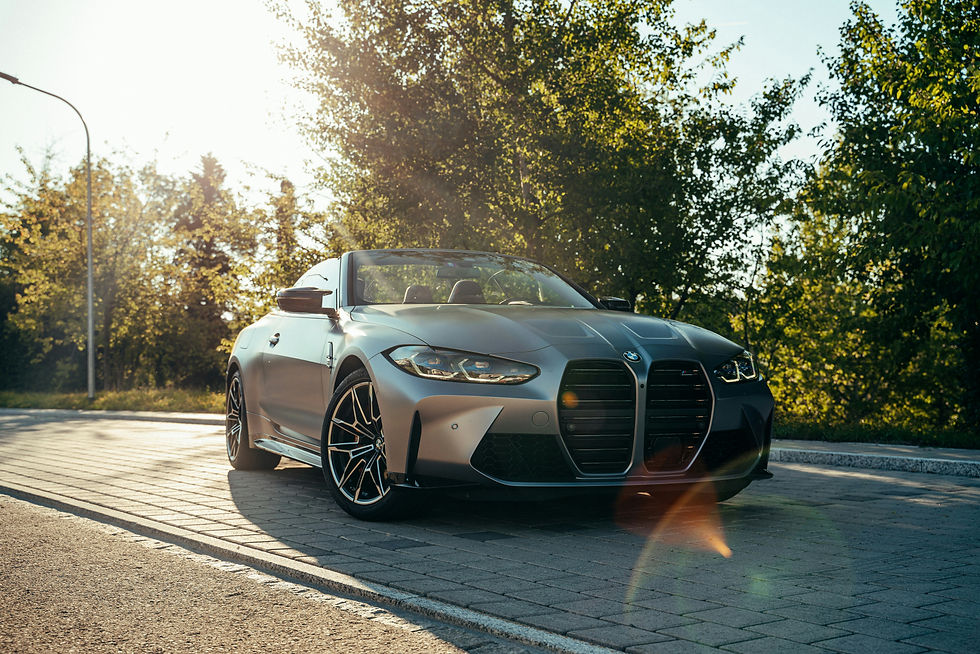
The front of the M3 is the most complex area for body kit work because of the number of functions that the factory bumper integrates. Behind the front bumper on every modern M3 generation sit the two large intercoolers for the twin-turbocharged S58 engine, the oil cooler, the main radiator and in many configurations the front brake cooling duct inlets. Any replacement front bumper needs to maintain adequate airflow to all of these components while delivering the desired visual change.
This is why front bumper replacement on an M3 should always be sourced from a manufacturer who has actually tested their bumper on the specific M3 generation. A bumper that partially blocks one of the intercooler openings causes the corresponding side of the engine to run hotter than the other under sustained load. This creates a thermal imbalance that affects power output consistency and can accelerate wear on the more thermally stressed components over time.
The best front bumper designs for the G80 M3 work with BMW's existing intake geometry rather than replacing it with a completely different layout. They extend the lower splitter section, add aerodynamic definition to the outer corners with canard-ready mounting points and often include dedicated brake cooling duct openings that route air to the front brake assemblies more directly than the factory design. The result is a front end that looks significantly more aggressive without compromising the thermal management the S58 engine depends on.
Carbon Fibre Front Splitters for the M3
A front splitter in carbon fibre for the M3 is typically a bolt-on addition to the factory lower bumper section rather than a full bumper replacement. These components use the existing factory mounting points and extend the splitter area forward. The carbon fibre construction keeps weight to a minimum which matters because any weight added to the front of the car affects the M3's front-to-rear balance, a characteristic that BMW M GmbH calibrated very carefully during development.
The depth of the splitter needs to be chosen with the car's actual use in mind. A splitter that extends 40mm forward of the factory bumper adds meaningful aerodynamic effect at speed but will contact steep driveways, steep ramps and high-profile speed humps in daily Miami driving. A 20mm extension is more conservative and preserves more ground clearance for real road use. Knowing how the car is primarily used, track versus street, before selecting splitter depth avoids the frustration of daily scraping.
5. Side Skirts and Rocker Panels: Function and Form
The BMW M3 already has factory side sill extensions that are different from the standard 3 Series. These factory extensions are part of the aerodynamic package that BMW M developed alongside the rest of the M3's wider body. Aftermarket side skirts either replace these factory extensions entirely or add to them with a lower extension that sits beneath the factory section.
The most important practical consideration for side skirt selection on an M3 in Miami is ground clearance. The M3's suspension is already set to a lower ride height than the standard 3 Series and aftermarket side skirts that hang below the factory sill position bring the lowest point of the bodywork closer to the road. On Miami's varied road surfaces, which include some genuinely poor pavement particularly in areas away from the main arterial roads, this can create contact events that damage the skirt and in some cases the sill beneath it.
High quality side skirt additions from manufacturers like 3D Design, Vorsteiner and AC Schnitzer are designed with this real-world consideration in mind. They add visual definition and aerodynamic function at a depth that still allows the car to navigate typical road conditions without constant contact events. Their mounting is also designed to be secure enough that motorway vibration does not cause the component to flex or vibrate audibly at speed, which is a common quality problem with budget side skirt products.
6. Rear Bumper and Rear Diffuser: What They Actually Do
The rear bumper area of the BMW M3 is where the most sophisticated aerodynamic work happens in a body kit build. The factory M3 already has a rear diffuser integrated into the lower rear bumper section. The G80 M3 CS goes further with an active diffuser that changes its angle depending on driving mode. Aftermarket rear diffusers for M3 models build on this factory thinking with more aggressive fin arrangements and larger diffuser sections that channel more of the underbody air exit more efficiently.
A replacement rear bumper for the M3 typically integrates the diffuser section as part of the same component, providing a unified lower rear appearance rather than an add-on diffuser below the factory bumper. These replacement bumpers reposition the exhaust tip exits in some configurations, accommodate different exhaust system diameters and sometimes remove the factory rear parking sensor housings from their original positions to accommodate the wider diffuser section.
Any rear bumper that affects the parking sensor positions requires the sensors to be correctly relocated and tested after installation. A rear parking sensor that was not correctly reinstalled after a bumper change provides inaccurate distance readings or fails completely. On a car the size of the G80 M3 rear parking sensors are a genuinely useful safety feature and their correct function after any rear bumper work should always be verified.

7. Rear Wings and Spoilers on the M3
The BMW M3 has had various factory rear spoiler treatments across its generations. The E30 M3 had the famous boot lid spoiler that became one of the defining visual elements of the car. The E46 M3 had a modest boot lid spoiler and offered a larger CSL-style wing on special models. The G80 M3 has a more integrated boot lid spoiler treatment and the M3 CS adds a large carbon fibre wing that was developed for real aerodynamic function not just aesthetics.
Factory CSL and CS Wing Reference
The G82 M4 CSL wing is the most aerodynamically significant factory wing ever fitted to a road-legal BMW M Series car. It was developed alongside the rest of the CSL's aero package through extensive testing and produces genuine downforce that complements the front aerodynamic work on that car. For M3 owners who want a wing that references factory M performance, the CS-spec wing is the benchmark and several aftermarket manufacturers produce versions for standard M3 models that are inspired by its design.
Aftermarket Wing Options for the M3
The range of aftermarket wings available for the BMW M3 runs from modest boot lip spoilers that add just a few inches of height above the factory treatment to full GT-style swan neck or endplate wings on 200mm plus risers. The right choice depends entirely on how the car is used and what the owner wants from the aerodynamics.
For a street driven M3 a wing in the 100 to 150mm height range above the boot lid surface produces visible rear downforce benefit at motorway speeds. A wing taller than this on a street-only car starts to look like a race car accessory that the car does not support overall. For a track-focused M3 taller wings with larger chord length and adjustable angle of attack are appropriate because the downforce they generate is meaningful at the speeds the car reaches on circuit.
8. Wide Body Conversions on the BMW M3
A wide body conversion takes the M3 beyond the factory arch dimensions by adding extended fender flares that physically widen the car at the front and rear. This is the most dramatic type of body kit transformation available for the M3 and it is also the most complex to execute correctly.
The primary functional purpose of wider arches is accommodating wider wheels and tyres. A rear tyre that is significantly wider than the factory fitment generates more contact patch with the road which translates into more traction under acceleration and more lateral grip under hard cornering. The wider the tyre the more rubber you have available. But the factory arch dimensions set a limit on how wide you can go before the tyre contacts the arch liner during suspension travel. A wide body conversion moves that limit outward and allows genuinely wider tyre packages to be fitted without rubbing.
The structural approach to wide body work on the M3 matters a great deal. Some kits use bolt-on overfenders that attach to the factory bodywork without any cutting of the original metal. These are fully reversible and maintain the factory body structure intact. Other approaches require cutting the factory arch and welding on extended metal before adding the overfender. This is a more permanent change that requires skilled bodywork to execute cleanly and leaves the car in a different structural state than a bolt-on kit.
For owners who want wide body aesthetics without committing to the most invasive approach, kits from manufacturers like Prior Design use a bolt-on system for the M3 that creates a convincing wide body appearance while remaining reversible. For owners who are committed to a permanent build and want the widest possible arch dimensions, fully welded wide body work by a specialist metal fabricator followed by professional paint and bodywork is the higher standard approach.
Wide Body Reality Check A wide body M3 that does not have the corresponding wheel and tyre package to fill the wider arches looks unfinished and actually worse than a standard-width car. Wide arches with the factory wheel size leave enormous gaps that defeat the visual purpose of the conversion. Plan the wheel and tyre specification alongside the arch width from the beginning of the project. |
9. Materials Used in BMW M3 Body Kits
Dry Carbon Fibre
Dry carbon is the premium choice and the material most associated with serious M3 performance builds. It is produced using an autoclave curing process that applies heat and pressure to pre-impregnated carbon fibre sheets. The result is a very high fibre to resin ratio that makes the finished panel both stiffer and lighter than wet lay carbon. A dry carbon front splitter for an M3 can weigh less than half of what a comparable fibreglass component would weigh. For a car whose unsprung weight and polar moment of inertia affect handling the way the M3's does, this weight reduction is genuinely meaningful.
Pre-preg Wet Carbon
Pre-impregnated wet carbon uses a resin-rich layup process that produces a heavier panel than dry carbon but still significantly lighter than fibreglass. The surface finish tends to be glossier and deeper than dry carbon which some owners prefer for a street-focused build. Wet carbon is also more accessible in price for components where the weight difference compared to dry carbon matters less, such as interior trim panels or door mirror covers.
Forged Carbon
Forged carbon uses chopped carbon fibre strands compressed under heat and high pressure rather than woven sheet carbon. The result is a distinctive marbled pattern that looks completely different from conventional woven carbon and that is very popular for complex curved shapes that are difficult to produce with woven sheets. Several BMW-specific manufacturers are using forged carbon for M3 body components where the complex surface geometry suits the material's forming characteristics.
Fiberglass Reinforced Plastic
Fibreglass is the most accessible material for BMW M3 body kits and is used by a large number of manufacturers at the more affordable end of the market. It is heavier than any carbon fibre variant but it holds paint well and can produce a smooth factory-quality surface when correctly prepared. For painted body kit components where the owner wants a colour-matched finish rather than a visible carbon weave, fibreglass is a completely legitimate material choice. The quality differential between manufacturers using fibreglass is significant however. Poorly made fibreglass panels warp in heat and have surface irregularities that require extensive preparation before paint will sit correctly on them.
Polyurethane
Polyurethane is a flexible plastic material that is more resistant to cracking on minor impacts than fibreglass. It is popular for front lip components and side skirts that have the highest risk of contact with kerbs and speed humps during normal driving. Its flexibility means it is more likely to deflect and return to shape on low-speed contact rather than cracking. The trade-off is that polyurethane does not have the same surface quality as fibreglass for paint adhesion and can be more challenging to finish to a high standard.
Material | Weight | Strength | Paint Compatibility | Cost Level | Best Application |
Dry Carbon Fibre | Lightest | Highest stiffness | Clear coat over weave | Highest | Splitters, wings, diffusers on track builds |
Wet Carbon Fibre | Light | High stiffness | Clear coat over weave | High | Decorative panels, street builds |
Forged Carbon | Light | Very good | Clear coat over pattern | High | Complex curved shapes |
Fibreglass | Moderate | Rigid but brittle | Excellent with paint | Moderate | Painted bumpers and skirts |
Polyurethane | Moderate to heavy | Flexible, impact resistant | Good with correct primer | Lower | Front lips, skirts on daily driven cars |
10. Top BMW M3 Body Kit Manufacturers
Vorsteiner
Vorsteiner produces BMW M3 body components in both carbon fibre and fibreglass that have earned a strong reputation in the BMW enthusiast community. Their GTS style packages for various M3 generations are designed to work as complete coordinated kits where every component was developed together. Vorsteiner's carbon fibre quality is consistently high and their fitment on BMW M3 models is well regarded by independent installers who have worked with their products on multiple builds.

3D Design
3D Design is a Japanese BMW specialist that produces carefully refined body kit components for M3 models with a design philosophy that prioritises aesthetic harmony with the factory design over extreme aggression. Their front lip additions, side skirts and rear diffuser components for G80 M3 and earlier generations are among the most respected options for owners who want a polished upgrade rather than a dramatic transformation. 3D Design components are consistently praised for their fitment accuracy and surface quality.
AC Schnitzer
AC Schnitzer is one of the oldest and most established BMW tuning companies in Germany, with a history that predates the current generation of aftermarket specialists by several decades. Their body kit components for the M3 are developed alongside their wider performance enhancement packages and carry a design language that is immediately recognisable as AC Schnitzer. For owners who want a complete transformation including engine, suspension and body from a single trusted source, AC Schnitzer is one of the most coherent options in the BMW specialist market.
Manhart Performance
Manhart is a German BMW specialist known primarily for their dramatic power upgrade packages but who also produce comprehensive body kit offerings for M3 models. Their visual packages tend toward the more aggressive end of the spectrum with wider arch programs, large rear wings and ground clearance-challenging splitter depths. Manhart builds are typically comprehensive projects that combine body, wheel, suspension and powertrain modifications into a complete vehicle transformation.
Liberty Walk
Liberty Walk's bolt-on wide body conversion kit for the BMW M3 is one of the most dramatic options available if you want a genuine wide body statement. Their overfender approach adds significant width to both the front and rear of the car without cutting factory metal, making the modification more reversible than welded wide body work. Liberty Walk M3 builds are polarising in appearance, which is exactly the point. They are unambiguously visually dramatic and they attract serious attention everywhere the car goes.
Prior Design
Prior Design is a German company that produces full bolt-on wide body kits for BMW M3 models across multiple generations. Their approach uses a more refined wide body aesthetic than Liberty Walk, with smoother integration of the arch extensions into the factory body line. Prior Design kits for the M3 are widely regarded as having better panel fit and more considered proportions than many other wide body options at similar price points.
11. Generation-by-Generation BMW M3 Body Kit Guide
E30 M3 Body Kits (1986 to 1991)
The original BMW M3 was already a purpose-built racing homologation car with wide arches, a large rear spoiler and aerodynamic bodywork that was fundamentally different from the standard E30 3 Series. Body kit work on E30 M3s typically focuses on adding motorsport-inspired components that reference the E30 M3 Sport Evolution or the E30 M3 DTM racing cars. These builds require specialist knowledge of the car's mechanical layout and the relatively limited availability of specific aftermarket components.
E36 M3 Body Kits (1992 to 1999)
The E36 M3 has a large aftermarket support community and extensive body kit availability. GTR-style front bumpers with large splitters, lightweight rear wings and fibreglass or carbon fibre side skirts are widely available. Wide body conversion kits for the E36 M3 are also available and when combined with the correct wheel and tyre package create a very aggressive classic-meets-modern aesthetic that is popular in the current BMW modification scene.
E46 M3 Body Kits (2000 to 2006)
The E46 M3 remains one of the most popular M3 generations for modification work. The factory CSL body kit, which was offered as a limited production variant, is the reference point for E46 M3 body kit aesthetics. Aftermarket CSL-spec front bumpers, CSL-style boot spoilers and CSL-inspired side skirts are widely available and give a standard E46 M3 much of the visual impact of the factory CSL at a fraction of the cost. Wide body builds on the E46 M3 are also well represented with options from Prior Design and several Japanese manufacturers.
E92 M3 Body Kits (2007 to 2013)
The E92 M3 coupe is one of the most frequently modified M3 generations in the current market. Its naturally aspirated V8 engine and coupe body make it highly desirable and the aftermarket support is extensive. Vorsteiner's GTS body kit for the E92 M3 is one of the most complete and respected packages available, transforming the car's appearance with a GTS-inspired front bumper, side skirts, rear diffuser and rear wing that work as a coherent set. Prior Design and 3D Design also produce strong options for the E92.
F80 M3 Body Kits (2014 to 2020)
The F80 M3 was the first turbocharged M3 and attracted significant attention from tuners who saw the potential of the S55 engine. The body kit market for the F80 is mature and well developed with options from Vorsteiner, 3D Design, AC Schnitzer and several other respected manufacturers. The F80 CS front bumper and rear diffuser from the factory serve as reference points for the aftermarket and many F80 kit manufacturers based their designs around the proportions of those factory performance parts.
G80 M3 Body Kits (2021 to Present)
The G80 M3 has a distinctive design language dominated by the large kidney grille opening and the functional front end venting. Body kit manufacturers for the G80 have had to work around these prominent design elements rather than simply overlaying conventional bumper shapes. 3D Design, Vorsteiner and AC Schnitzer have all released G80 M3 packages that complement the factory design while adding aerodynamic definition and visual aggression. The CS-spec components from the factory are also available as genuine BMW parts for standard G80 M3 owners who want the most factory-authentic upgrade path.

12. Aerodynamics: What Is Real and What Is Just Looks
This section deserves honest treatment because there is a lot of marketing language in the body kit industry that overstates aerodynamic benefits and a lot of owners who fit aggressive-looking components expecting performance gains that do not materialise.
Real aerodynamic benefit from a body kit requires the components to have been tested on the specific car, not just designed to look like they have aerodynamic function. A front splitter that extends horizontally does generate downforce at the front axle at speed. This is real and measurable. The amount depends on the splitter's surface area, its height from the ground, the speed of the car and how cleanly air reaches the splitter without being disrupted by other bodywork.
A rear wing that sits in clean undisturbed air above the roofline generates real downforce. A rear wing that sits in the turbulent wake created by the roofline generates much less. The height of the wing on its risers determines how clean the air it works with actually is. This is why the most effective wings on track-focused builds are mounted higher than what looks proportionally conservative.
Side skirts genuinely improve aerodynamic efficiency by preventing turbulent air from getting into the underbody zone from the sides. This is a real function even if it is hard to feel through the steering wheel at normal road speeds. Rear diffusers generate real rear lift reduction when the fin geometry is correct and the approach velocity of the air reaching the diffuser is consistent.
What does not produce real aerodynamic benefit is plastic components that are shaped to look aerodynamic but that are not positioned or engineered to actually interact with airflow in the way real aerodynamic surfaces do. A decorative carbon fibre add-on bonnet vent that is not connected to any actual cooling or airflow management function looks like a functional part but contributes nothing aerodynamically. Buyers should ask manufacturers for specific aerodynamic data on any component they are considering for a track-focused build.
13. The BMW M3 Body Kit Installation Process
Stage One: Pre-Installation Assessment
Before any panel is removed or any new component is touched the existing bodywork is inspected carefully. Paint condition at the areas adjacent to the new components is documented. Factory component fixing points and fastener locations are identified. Any electronics such as parking sensors, active aero actuators or radar sensors that need to be transferred to new components are located and their function is verified before removal. This baseline gives the installer a complete picture of what they are working with.
Stage Two: Dry Fitting All Components
Every new component is dry fitted to the car before any adhesive, sealant or paint is applied. This means physically attaching each part at its mounting points without permanent fixing to check panel gaps against adjacent factory panels, alignment of cut-outs for sensors and lights, overall proportion against the car's body lines and whether any adjustment to the component or to the mounting is needed before proceeding. Dry fitting is the step that prevents discovering problems after a panel has already been painted or bonded, which is significantly more expensive to correct.
Stage Three: Paint and Surface Preparation
Components that will be colour matched to the car's paint are sent to the body shop at this stage with the correct paint code and any specific instructions about finish type. Carbon fibre components that will remain in their natural finish are inspected for surface quality and given a fresh clear coat if needed. All mounting surfaces on the car are cleaned and any corrosion protection treatment needed at cut or drilled areas is applied before final fitting.
Stage Four: Final Installation and Fixing
Components are installed in the correct sequence, using the combination of factory-style clips, structural adhesive where specified and discrete fasteners where needed. Panel gaps are checked and adjusted throughout the installation. Sensor and electronics connections are made and tested at each stage rather than left to a final test at the end. Heat shielding around exhaust components near any new bodywork is verified and supplemented where the new routing creates new thermal exposure.
Stage Five: Alignment, Sensor Testing and Road Verification
After all components are fitted the car is checked for correct alignment of all new panels. Every sensor that was disturbed during the installation is tested for correct function including parking sensors at all four corners, any radar sensors in the front or rear bumper and any aerodynamic actuators. The car is taken for a road test at progressively increasing speeds to check for wind noise from any poorly sealed gaps, vibration or flexing from any inadequately secured component and correct straight-line tracking after any suspension-adjacent work.
14. Common Mistakes That Ruin a BMW M3 Body Kit Build
Buying Cheap Components from Unknown Manufacturers
The BMW M3 body kit market has a large number of low-cost manufacturers producing components that look attractive in product photos but that have poor fitment on the actual car. Panel gaps that are inconsistent with the factory bodywork, surface quality that requires extensive preparation before paint, and construction that vibrates at motorway speeds are the most common problems. On a car of the M3's quality and value these issues are immediately visible and they undermine the entire purpose of the build.
Mixing Components from Different Manufacturers
Each manufacturer designs their components with a specific reference line and proportional logic. A front bumper from one brand combined with side skirts from another and a rear diffuser from a third rarely lines up correctly because the three components were not designed together. The result is visible inconsistency in the visual flow from front to rear that makes the car look uncoordinated even if each individual component is high quality on its own.
Ignoring Ground Clearance on a Street-Driven Car
Miami has driveways, parking ramps, speed humps and road surfaces that create ground clearance challenges for any car with lowered suspension. An M3 with a deep front splitter and aggressively lowered suspension that looks spectacular in a car park will scrape those components on the first steep driveway exit. Choosing component depths and suspension heights that balance the desired visual with the actual ground clearance needed for the roads you drive is a decision that should be made with full awareness of your daily route.
Skipping Electronics Verification After Bumper Work
Front and rear bumpers on the G80 M3 contain radar sensors for the adaptive cruise control system, parking sensors and in some configurations a front camera. Any bumper replacement that does not correctly reinstall and test all of these components leaves the car with non-functioning safety systems. A G80 M3 with a disabled radar sensor may enter an error state that affects the entire driver assistance system functionality.

15. Wheel and Pairing with a Body Kit
A BMW M3 body kit build is only complete when the wheel and tyre package is matched to the body work proportions. A standard-width wheel in a body that has been widened through arch extensions looks unfinished. The visual point of wider arches is to accommodate wider wheels and tyres that fill those arches correctly.
For a standard-width M3 body kit without arch extensions, wheels in the 19 to 20 inch diameter range with widths of 9.5 inches at the front and 10.5 to 11 inches at the rear with the correct offset for the M3's hub and caliper clearances produce the best visual and functional result. For a wide body conversion the rear wheel width can increase to 12 inches or beyond depending on the arch extension width, which requires careful offset calculation to maintain clearance from the suspension and the arch liner.
Tyre selection should consider how the car is used. For a street-driven M3 a performance street tyre in the Michelin Pilot Sport or Continental SportContact range provides the right balance of dry grip, wet weather capability and wear life. For a track-focused M3 a semi-slick like the Michelin Pilot Sport Cup 2 or the Michelin Pilot Sport 4S is closer to the correct choice for circuit use.
16. Paint, Finish and Protection After a Body Kit
After a body kit installation is complete protecting the new components and ensuring the paint finish across the whole car is consistent is the final stage of the build. Any painted components need time to fully cure before any protective film is applied, typically a minimum of 30 days for a freshly applied base coat and clear coat.
Paint protection film applied to the most vulnerable areas of the body kit, particularly the front splitter, the lower sections of the side skirts and the front bumper lower area, protects the new components from stone chip damage and contact damage. These are exactly the areas that accumulate stone chips fastest during motorway driving and that are most vulnerable to contact events during parking and manoeuvring.
For carbon fibre components in their natural finish a ceramic coating applied over the clear coat provides UV protection and surface hardness. In Miami's intense UV environment unprotected carbon fibre clear coat can yellow and develop surface hazing within a few years. A ceramic coating significantly extends the period before the clear coat needs to be replaced.
17. Cost Breakdown by Category
Component Category | Budget Range | Premium Range | Factors That Affect Cost |
Front lip or splitter | Fibreglass, add-on type | Dry carbon, custom fit | Material, depth, canard integration |
Front bumper replacement | Fibreglass standard fit | Dry carbon, OEM-style fit | Material, sensor integration quality |
Side skirts pair | Fibreglass bolt-on | Carbon fibre, precision fit | Material, fitment accuracy, finish quality |
Rear diffuser | Fibreglass, basic fins | Dry carbon, complex fin array | Fin complexity, material, integration with exhaust |
Rear wing | Boot lip spoiler, fibreglass | Carbon fibre adjustable GT wing | Height, chord length, adjustability, material |
Wide body arch kit | Fibreglass bolt-on overarches | Welded metal, full respray | Approach, metal versus bolt-on, paint scope |
Installation labour | Basic fitting only | Full specialist with coding and testing | Complexity, electronics, alignment, road test |
Paint work for body kit | Single panel colour match | Full respray with PPF | Number of panels, colour complexity, protection |
18. How Squadra Nostra Handles BMW M3 Body Kit Projects in Miami
Squadra Nostra approaches BMW M3 body kit projects as complete builds rather than individual parts installations. The team's starting point with every M3 owner planning a body kit is a conversation about what the car should communicate when the build is finished, how the car is used and what the realistic budget for the project is. These three pieces of information determine every component recommendation that follows.
The team has direct experience with multiple generations of M3 body kit builds and can advise on which manufacturers produce consistently good fitment and surface quality on specific M3 generations versus which ones look good in photos but create problems during installation. This manufacturer-specific knowledge is something that only comes from having actually worked with these products on real cars, not from reading specifications sheets.
Every Squadra Nostra body kit installation follows the full process described in this guide, including pre-installation assessment, dry fitting, electronics verification, road testing and documentation. Owners receive photographic records of the build process and confirmation of all electronics and sensor functions before the car is returned.
Contact Squadra Nostra at squadranostra.com, by calling 305-250-9853 or by email at info@squadranostra.com. Operating hours are Monday through Friday from 8 AM to 8 PM and Saturday through Sunday from 10 AM to 6 PM.
19. Closing Thoughts on the BMW M3 Body Kit
A BMW M3 body kit build done correctly is one of the most satisfying automotive projects you can undertake. The M3 is already exceptional and a correctly specified and properly installed body kit extends what it does best. Better visual presence. In many cases genuine aerodynamic improvement. A car that feels more like a personal statement and less like one of thousands of identical examples.
The difference between a build that achieves this and one that falls short comes down to component quality, manufacturer selection, installation standards and the knowledge of the team doing the work. Squadra Nostra brings all of these to every BMW M3 body kit project. If you are planning a build in Miami, start the conversation with the team.

Frequently Asked Questions About BMW M3 Body Kits
These are the questions BMW M3 owners ask most often about body kit modification.
FAQ 1: Will a body kit affect my BMW M3 warranty?
Bolt-on body kit components that do not touch any mechanical, powertrain or electronic systems do not directly affect BMW's warranty on those systems. However if a body kit installation disturbs or damages any components that are under warranty that damage could be attributed to the modification. Using a specialist who correctly installs and verifies all sensor and electronics functions after any bumper or bodywork change eliminates the risk of warranty issues caused by incorrect installation.
FAQ 2: Which generation of BMW M3 has the best body kit support?
The E46 and E92 M3 generations have the most extensive aftermarket support with the widest range of manufacturers and the most established fitment data available. The G80 M3 is growing rapidly in aftermarket support but as a newer car the range is still developing. All generations have good options available but the older generations have the advantage of manufacturers having had more time to develop and refine their fitment templates.
FAQ 3: How much does a full BMW M3 body kit cost in Miami?
The total cost of a complete body kit project on a BMW M3 varies enormously based on the scope, the material and the manufacturer. A bolt-on fibreglass front lip, side skirts and rear diffuser from a reputable manufacturer with professional installation represents the accessible entry point. A full dry carbon kit from a premium manufacturer with wide body arch extensions, professional installation, paint matching and PPF protection is a significantly larger investment. Squadra Nostra can provide a detailed quote for your specific M3 generation and build goals.
FAQ 4: Does a wide body kit require new wheels and tyres?
Yes. A wide body conversion that adds significant arch width without fitting wider wheels and tyres to fill those arches looks unfinished. The arches are widened specifically to accommodate a wider wheel and tyre package. The wheel and tyre specification needs to be planned as part of the same project, not as an afterthought. Squadra Nostra advises on the correct wheel width, diameter and offset for any wide body M3 build.
FAQ 5: Can a BMW M3 body kit be removed and the car returned to standard?
Bolt-on components that used factory mounting points can be removed and the original panels reinstalled provided they were kept in good condition after removal. Wide body kits using bolt-on overfenders over the factory arch are also reversible in the same way. Kits that required cutting factory metal or permanently modifying the body structure are not reversible without significant bodywork and paint. For owners who may want to sell the car in standard specification in the future, reversible bolt-on approaches are the sensible choice.
FAQ 6: What is the best body kit for the G80 BMW M3?
For a restrained and refined upgrade the 3D Design package for the G80 M3 is widely regarded as producing one of the best results in terms of visual harmony with the factory design. For owners who want more aggression the Vorsteiner G80 GTS package takes the car further. For wide body treatment the Prior Design kit produces a more refined result than many competitors at a similar price point. The right choice depends on how aggressive the owner wants the finished car to look.
FAQ 7: Does a rear wing improve performance on a street-driven M3?
A quality wing produces measurable rear downforce at speeds above approximately 80 mph and that downforce increases with speed. On a street-driven M3 that rarely or never exceeds motorway speeds the aerodynamic benefit of a rear wing is minimal in practice. The benefit becomes more significant on a track-driven car that reaches higher speeds for sustained periods. For a street build a wing is primarily a visual choice.
FAQ 8: What material is best for an M3 body kit in Miami?
Dry carbon fibre is the premium choice for weight and stiffness but represents a significant cost premium. For components that will be painted rather than left in natural carbon finish, fibreglass from a quality manufacturer is a practical and cost-effective choice that produces excellent results when properly prepared and painted. For front lip and side skirt components that face high contact risk in daily Miami driving, polyurethane offers more impact resistance than fibreglass.
FAQ 9: How does an M3 body kit affect insurance?
Body kit modifications should be disclosed to your insurance provider. Some specialist exotic and performance car insurance policies are designed for modified vehicles and accommodate body kit work without penalising the premium significantly. Standard consumer auto insurance policies vary in how they treat modifications and failing to disclose significant body changes could affect a claim in the event of an accident. Squadra Nostra recommends verifying your insurance position before committing to any significant body modification.
FAQ 10: Can I add a body kit to a BMW M3 CS or Competition without invalidating its special specification?
The M3 CS and Competition variants can be modified with body kits in the same way as standard M3 models. However for the most desirable variants there is a collector value argument for keeping them in factory specification. A low-mileage M3 CS in factory condition commands a premium in the used market that a modified example may not. If resale value of a desirable variant is important the body kit decision should account for this consideration. Squadra Nostra can advise on the market implications for specific M3 variants.
FAQ 11: What happens to parking sensors when a rear bumper is replaced?
The parking sensors in a BMW M3 rear bumper need to be correctly relocated into the new bumper and tested after any bumper replacement. The sensor housings need to be flush with the new bumper surface with no gaps that would affect the sensor's detection angle. The sensor wiring needs to be reconnected correctly and the complete system tested with a diagnostic scan to confirm all sensors are reading correctly and that no fault codes have been generated in the parking system module.
FAQ 12: How do I book a BMW M3 body kit consultation with Squadra Nostra?
Contact Squadra Nostra at squadranostra.com, by calling 305-250-9853 or by emailing info@squadranostra.com. When you reach out describe your M3 generation, the look you are trying to achieve and whether the car is primarily street or track driven. The team will advise on the specific manufacturers and components that are appropriate for your M3 and your goals, what the installation process involves and what the realistic timeline and cost for the project would be.


Comments