


BMW Service Miami: The Complete Guide to Keeping Your BMW Running at Its Best
BMW service Miami is a phrase that covers a huge range of needs. Some owners drive a 3 Series as their daily car and want reliable, affordable service that keeps it running correctly. Others own an M5 Competition or an M8 Gran Coupe and expect their service provider to understand the performance requirements and engineering of what is genuinely a high output sports car dressed in a saloon body. And some own the full BMW M4 CSL or the rare M3 CS and need a team that has genuine experience with cars that push the boundaries of what a road car can do.
Whatever your BMW is, it deserves service that matches what it was built to do. BMW designs its vehicles to high standards and fills them with technology that needs correctly trained hands and correct diagnostic equipment to be serviced properly. This guide covers BMW service in Miami across every major category. It explains what each service item involves, why it matters specifically on a BMW, what oil and fluid specifications are correct, when service needs to happen and what goes wrong when it is skipped or done incorrectly.
Squadra Nostra is Miami's specialist in exotic and luxury car service. The team brings over 15 years of combined experience working on BMW and other premium and performance vehicles. This guide is written from real service knowledge of what BMW vehicles need at every stage of ownership in Miami's specific climate and driving conditions.
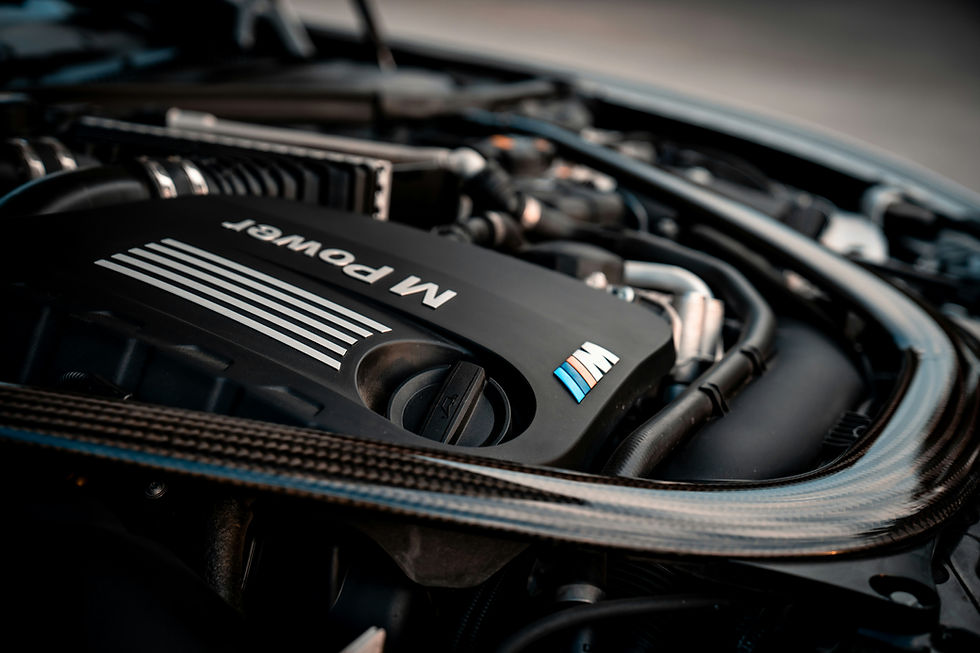
TABLE OF CONTENTS
1. BMW Service Miami: Why the City and the Car Both Demand Proper Care
Miami is one of the most demanding environments for any vehicle. The heat is sustained for most of the year. The humidity near the coast is high. The salt air creates a mildly corrosive environment for metal components underneath the car. The stop and start traffic in areas like Brickell, Wynwood and Miami Beach puts repeated thermal stress on the engine and cooling system that highway driving at speed actually manages more efficiently. And the quality of roads in some areas creates more suspension and tyre work than drivers coming from smoother city environments are used to.
A BMW in Miami is dealing with all of these factors simultaneously. The cooling system works harder than it would in a northern state. The battery degrades faster because of sustained high ambient temperatures. Brake fluid absorbs moisture from the humid air more quickly than in a dry climate. Rubber components in the suspension and cooling system age faster with UV exposure and heat. Tyres wear faster on rough road surfaces. Understanding these Miami-specific pressures is the foundation of caring for a BMW correctly in this city.
Finding the right BMW service provider in Miami is the challenge that every BMW owner eventually faces. There are many shops that claim expertise on European vehicles. Fewer of them have the specific diagnostic equipment, the correct fluid knowledge, the BMW model-specific experience and the standards required to service a BMW correctly across every system the car contains.
Squadra Nostra Note BMW owners in Miami who have used general mechanics frequently come to us after discovering that the oil grade used was incorrect, that the diagnostic scan performed did not access all BMW modules, or that a component was replaced without the correct post-installation coding through BMW's ISTA software. We see these situations regularly and the cost of correction is always higher than the cost of doing it right the first time. |
2. What Makes BMW Service Different from Servicing a Regular Car
BMW builds its vehicles to a level of engineering precision and electronic complexity that goes significantly beyond what most mainstream manufacturers produce. This creates specific service requirements at every level of the car's systems.
BMW's Electronic Architecture
A modern BMW contains dozens of electronic control modules networked together through BMW's own bus systems. The engine control module, the transmission control unit, the Dynamic Stability Control system, the Active Suspension system on equipped models, the chassis dynamics systems, the iDrive head unit, the body control module and the powertrain control systems all communicate with each other and all store fault codes independently. Accessing the full picture of what is happening in a BMW's electronics requires BMW ISTA diagnostic software or equivalent professional grade multi-brand software with BMW-specific capability. A standard OBD reader sees a small fraction of what these systems contain.
BMW's Fluid Specifications
BMW sets its own internal specifications for engine oil, brake fluid, coolant and transmission fluid that go beyond general industry standards. The engine oil specification BMW uses, called BMW Longlife, has its own approval process that requires oil manufacturers to specifically test and certify their products against BMW's criteria. Using an oil that meets a general standard but not the BMW Longlife approval means the engine is running on a fluid that was not designed for its specific operating characteristics.
Component Coding After Replacement
This is one of the most frequently misunderstood aspects of BMW service. When certain components on a modern BMW are replaced they need to be coded to the car's vehicle ID using BMW ISTA software. This is not optional and it is not a dealer-only procedure for a properly equipped independent specialist. Components including batteries, steering racks, the DME engine control unit, transmission control units and several other modules need specific coding steps after installation. A component that was fitted without the correct coding may function in a degraded mode or may trigger fault codes across related systems.

3. Why You Should Avoid General Mechanics for BMW Service in Miami
The risks of using a general mechanic for BMW service in Miami are specific and they compound over time. The first risk is the diagnostic gap. A general OBD scanner gives partial information about a BMW's systems. Fault codes that exist in the transmission control unit, the active suspension module, the DSC system or the battery management system are invisible to a technician using the wrong diagnostic tool. Service that does not start with a complete multi-module scan is service that may be addressing symptoms while missing causes.
The second risk is fluid specification. BMW's Longlife oil approval is not a marketing distinction. It reflects real testing by BMW against the specific operating conditions of their engines. A general mechanic using a parts catalogue recommendation may select an oil that meets a broad API standard but that does not carry BMW Longlife approval. In a BMW engine this produces results that accumulate quietly. Oil consumption may increase slightly. Oil change intervals may need to be shortened because the oil is depleting its additive package faster than BMW Longlife approved oil would. Engine wear accumulates faster at the margins.
The third risk is the coding requirement. A general mechanic who replaces a BMW battery without registering it to the car's battery management system leaves the charging system running on the wrong voltage profile for the new battery. Over time this either overcharges or undercharges the new battery and shortens its life significantly. The same applies to other components that need post-installation coding. A specialist with the correct BMW diagnostic software prevents this from happening.
Important Warning Never use a shop for BMW service that cannot tell you exactly which diagnostic software they use and whether it can access all BMW control modules including the DME, EGS, DSC, EMF, ZGW and body electronics. If the answer is vague or they tell you a standard OBD reader is sufficient then they are not equipped to service a BMW correctly. |
4. Oil Service: The Most Important Thing You Do for a BMW Engine
Oil service is the foundation of BMW engine longevity. BMW engines are designed around tight tolerances, high operating temperatures and in many cases twin-scroll turbochargers that place sustained thermal demand on the oil. The oil in a BMW engine simultaneously lubricates every moving surface, carries heat away from the combustion zone, suspends combustion byproducts and provides the hydraulic pressure for the VANOS variable valve timing system that BMW engines have used across their range for many years.
The VANOS system deserves specific mention because it is one of the most oil-sensitive systems in a BMW engine. VANOS uses oil pressure to vary the timing of the intake and exhaust camshafts continuously based on engine load and RPM. The actuators that control this system have small oil passages that are sensitive to oil quality and to sludge buildup from oil that has been left in the engine past its service life. A BMW engine running on degraded oil develops VANOS sluggishness that shows up as hesitation at certain RPM ranges and rough running at idle. In advanced cases VANOS solenoid replacement is needed, which is an expensive repair that proper oil service prevents.
The BMW Condition Based Service System
Modern BMW vehicles use a Condition Based Service system, called CBS, that monitors actual driving conditions through sensors in the engine and calculates when each service item is genuinely due rather than using a fixed mileage interval. The oil quality sensor monitors the dielectric properties of the oil to assess its remaining useful life. The brake lining sensors measure pad thickness directly. The CBS system displays upcoming service items in the instrument cluster and gives advance notice before each item becomes critical.
The important thing to understand about CBS is that it calculates intervals based on typical driving conditions. In Miami where the heat is higher than the European conditions BMW calibrated the system around, the oil interval indicated by CBS may be at the longer end of what is appropriate. Many BMW specialists in Miami recommend treating the CBS oil interval as a maximum and considering an earlier change for cars that are driven in stop and start Miami traffic regularly or that see track use.
5. What Oil Does a BMW Use and Why the Grade Matters
BMW's oil specification is one of the most specific in the industry. The approval classes BMW uses are BMW Longlife-01, BMW Longlife-04, BMW Longlife-14 FE and BMW Longlife-17 FE+. Each applies to a different category of engine and requires a specific type of oil chemistry.
BMW Longlife-01
BMW Longlife-01 is the specification for older petrol engines including the N52, N54, N55 and N62 families. It calls for a fully synthetic oil in 5W-30 or 0W-40 grade. Common products that carry this approval include Castrol Edge Professional BMW LL01 5W-30 and Mobil 1 ESP Formula 5W-30.
BMW Longlife-04
BMW Longlife-04 is specified for diesel engines including the M57 and N47 families and for certain petrol engines with particulate filters. This specification requires a low SAPS oil that does not harm the diesel particulate filter or the gasoline particulate filter on petrol engines. Using a standard high SAPS oil in an engine that requires LL-04 specification clogs the particulate filter over time which is an expensive component to replace.
BMW Longlife-14 FE and 17 FE Plus
These newer specifications apply to the latest BMW engines including the B46, B48, B58, B57 and S58 families used in current 3 Series, 5 Series, 7 Series and M models. They use very low viscosity grades including 0W-20 to reduce internal friction at startup and improve fuel efficiency. Using a heavier grade oil in an engine specified for 0W-20 reduces the efficiency gains BMW designed into these engines and in some cases affects oil pressure at startup in cold conditions.

BMW Model / Engine | Oil Specification | Change Interval |
BMW 3 Series / B48 petrol | BMW LL-17 FE+ 0W-20 | Per CBS or annually |
BMW 5 Series / B58 petrol | BMW LL-17 FE+ 0W-20 | Per CBS or annually |
BMW 7 Series / B58 / N63 | BMW LL-17 FE+ 0W-20 or LL-01 5W-30 | Per CBS or annually |
BMW M3 / M4 (S58 engine) | BMW LL-01 FE 5W-30 or 0W-40 | Every 10,000 miles or annually |
BMW M5 / M8 (S63 engine) | BMW LL-01 or LL-01 FE 5W-30 | Every 10,000 miles or annually |
BMW X5 / X7 M50i (N63 V8) | BMW LL-01 5W-30 | Per CBS or annually |
BMW diesel / B57 engine | BMW LL-04 0W-30 or 5W-30 | Per CBS or annually |
BMW 2 Series / B46 petrol | BMW LL-17 FE+ 0W-20 | Per CBS or annually |
6. Spark Plugs, Ignition and Fuel System Service
BMW petrol engines use iridium or platinum tipped spark plugs that have longer service lives than conventional copper plugs. However they do not last forever and their service interval depends on the engine family and how the car is driven. A BMW used for spirited driving with frequent high RPM use depletes spark plug electrodes faster than a car driven gently.
Worn spark plugs on a BMW produce incomplete combustion events that show up as a slight roughness at idle, a hesitation under acceleration at certain RPM ranges and in advanced cases misfires that trigger fault codes in the DME and can be felt as a stumble during acceleration. The S58 engine in the M3 and M4 is particularly sensitive to spark plug condition because of the high compression and boost pressures it operates at. Running worn plugs in this engine risks misfires that load the catalytic converters with unburned fuel and can cause converter damage.
The high pressure fuel injection system on modern BMW engines, known as High Precision Injection or HPI, uses direct fuel injection at pressures that are many times higher than conventional port injection systems. This system is very effective but it means that fuel does not wash over the intake valves as it does in a port injection system. Without fuel washing the valves, carbon deposits build up on the intake valve stems and seats over time and restrict airflow into the combustion chamber. This is called intake valve carbon buildup and it is a known characteristic of all direct injection engines including BMW's range. Walnut blasting, a process that uses crushed walnut shells propelled at high pressure to clean the valve stems, is the established service procedure for removing these deposits.
7. Brake System Service on a BMW
BMW's brake systems are matched to the performance capabilities of each model. A standard 3 Series has a capable but conventional brake setup. An M3 Competition comes with BMW M compound brakes that are genuinely high performance components matched to a car that can accelerate to very high speeds. And the optional carbon ceramic brakes available on certain M models are in a different category again in terms of performance capability and maintenance requirements.
Brake Fluid Service
Brake fluid hygroscopic means it absorbs moisture from the atmosphere over time. BMW recommends brake fluid replacement every two years as a standard interval. In Miami's humidity this interval is worth treating seriously because moisture absorption happens faster than in a dry climate. A brake fluid tester that measures moisture content can confirm whether replacement is needed before the scheduled interval or whether the fluid remains within acceptable limits. BMW specifies DOT 4 or DOT 4 Plus brake fluid depending on the model. Using DOT 3 fluid in a BMW that requires DOT 4 is inadequate because DOT 3 has a lower dry and wet boiling point than the specification requires.
Brake Pad and Rotor Service
BMW's CBS system monitors brake pad wear through sensors on the front and in many cases the rear pads. When the pad reaches minimum thickness the CBS system triggers a service indicator. The sensor is a single-use component that must be replaced along with the pads when it has triggered. Replacing the pads without replacing the sensor leaves a damaged sensor that may give a false reading.
BMW brake rotors have a minimum thickness specification stamped on the hat of each rotor. Measuring rotor thickness with a micrometer at the time of pad replacement confirms whether the rotors are within usable specification or whether replacement is needed. Running rotors that are at or below minimum thickness creates a risk of rotor failure under hard use and reduces the thermal capacity of the braking system.
BMW M Carbon Ceramic Brakes
Carbon ceramic brake systems on BMW M models, available as an option on the M3, M4, M5 and M8, require the same specific maintenance approach as Ferrari and Lamborghini carbon ceramic systems. The rotor material requires pad compounds specifically formulated for use with carbon ceramic surfaces. Using standard iron-spec pads on a carbon ceramic rotor causes surface damage to the rotor that is irreversible and requires expensive rotor replacement. Any shop performing brake service on a BMW with CCB must verify the rotor type before selecting any pad.
8. BMW Transmission Service: ZF and DCT Gearboxes
BMW uses two main types of automatic transmission depending on the model. The ZF 8-speed automatic gearbox, produced by ZF Friedrichshafen and used across the majority of BMW's non-M range, is one of the most widely used and well-regarded automatic transmissions in the premium car segment. The BMW M DCT dual-clutch transmission, used in certain M models, is a different and more complex unit.
ZF 8-Speed Transmission Service
BMW marks the ZF 8-speed gearbox as a lifetime fill transmission, meaning BMW does not publish a service interval for the fluid. This does not mean the fluid does not need changing. ZF itself recommends fluid service at regular intervals for extended transmission life and independent BMW specialists broadly agree that a fluid change at around 60,000 miles produces measurable improvement in shift quality and reduces the risk of valve body and mechatronic wear that becomes expensive to repair in high mileage examples.
The ZF 8-speed requires a specific BMW approved ZF Lifeguard fluid. Using a generic ATF that meets a broad specification but not the BMW-specific approval risks damaging the mechatronic unit that controls the transmission's hydraulic circuits. The transmission control unit also sometimes benefits from a software update through BMW ISTA when shift quality issues develop, as software improvements released after the car's production date can resolve certain driveability complaints without any mechanical repair being needed.
BMW M DCT Service
The M DCT gearbox in older M3 and M4 models is a dual-clutch automated manual gearbox that uses two separate clutch packs and delivers shift times that are genuinely impressive. Like all dual-clutch transmissions it has its own specific fluid requirements and its own service schedule. Degraded DCT fluid loses its lubrication and hydraulic properties and the first symptom is usually a coarser shift quality during spirited driving or jerky engagement at low speed in traffic. A fluid change at the correct interval and with the correct fluid specification maintains the transmission in the condition it was designed to operate in.

9. Cooling System Service in Miami Heat
BMW engines produce significant heat during operation and the cooling system manages that heat through a complex circuit that includes the engine block, the cylinder head, the radiators, the thermostat, the water pump, the coolant expansion tank and in many models oil-to-water heat exchangers for both the engine oil and the automatic transmission fluid.
BMW specifies its own coolant formulation that must not be mixed with standard automotive antifreeze. BMW's blue coolant and later the BMW Advanced Coolant in green are not interchangeable with each other or with off-the-shelf antifreeze. Mixing incompatible coolant types causes chemical reactions that form deposits inside the cooling system and reduce heat transfer efficiency. Flushing and refilling with the correct BMW coolant at the specified interval prevents this.
In Miami the cooling system faces greater demand than in cooler climates. The high ambient temperatures mean the difference between the coolant temperature and the ambient air temperature is smaller, which reduces how efficiently heat is transferred through the radiator. The cooling fans run more frequently and for longer periods. Water pump output is sustained for longer periods. All of these factors mean that any weakness in the cooling system, a slightly low coolant level, a marginal thermostat, a coolant hose that is beginning to soften, becomes more apparent faster in Miami than it would in a northern state.
BMW's electric water pump, used across many current models including the N20 N52 and N55 families, is a known wear item that typically reaches the end of its service life between 80,000 and 120,000 miles. The electric pump allows more precise control of coolant flow than a belt-driven mechanical pump but it is also a component with a finite service life and one whose failure leaves the car without any cooling circulation. Inspecting the water pump and cooling system components at each major service visit identifies an approaching failure before it creates a roadside overheating event.
10. BMW Electrical System: iDrive, Battery and Coding
The electrical system in a modern BMW is sophisticated in ways that affect every aspect of how the car functions. The iDrive system that manages the infotainment, navigation and vehicle settings is connected to the car's main electronics network. The Intelligent Battery Sensor on the negative terminal of the battery monitors battery health in real time and feeds data to the power management module that controls how the alternator charges the battery. This level of integration means that electrical service on a BMW is not simply replacing a component and plugging it in.
BMW Battery Service and Coding
BMW battery replacement requires registration of the new battery to the car's electronics through BMW ISTA or equivalent diagnostic software. The registration procedure tells the Battery Management System the type, capacity and specification of the new battery so the charging system manages it correctly. A battery installed without registration receives a charging voltage that was calibrated for the old battery's state of charge history. This typically results in the new battery receiving inadequate charging that shortens its life and can affect the performance of electrical systems during engine start.
In Miami's climate BMW batteries typically reach the end of their reliable service life earlier than in cooler environments because heat is the primary factor that accelerates electrochemical degradation inside a battery cell. Testing battery health annually using an appropriate tester that measures cold cranking amps and internal resistance gives advance warning of a battery approaching failure before it leaves the owner stranded.
BMW ISTA Diagnostic Scanning
BMW ISTA is the official BMW diagnostic software that accesses every control module in the vehicle, reads live data from all sensors, performs guided fault diagnosis, completes software updates and coding procedures after component replacement, and runs adaptation resets when calibration procedures are needed. A BMW service that does not include a full ISTA scan or equivalent full coverage multi-brand diagnostic scan is not providing the baseline information that a proper BMW service requires. Squadra Nostra uses equipment that accesses the full BMW module network at every service visit.
11. Suspension and Steering Maintenance
BMW's suspension systems range from conventional passive setups on standard models to the sophisticated active suspension systems available on high specification and M variants. The Adaptive M Suspension available on M models and the optional adaptive dampers on standard models use electronically controlled dampers that vary stiffness continuously based on road conditions and selected driving modes.
Rubber bushings throughout the suspension have a finite service life that is shortened by Miami's heat and UV exposure. The control arm bushings on the front suspension of BMW vehicles, particularly on 3 Series and 4 Series models, are a known wear item that shows up as vague steering feel, wandering at motorway speeds and a clunking noise over bumps when they approach end of life. Inspecting bushing condition at each service visit and replacing them before they fail completely maintains the steering precision that BMW suspension was designed to deliver.
BMW's electric power steering system on current models communicates through the vehicle electronics network and the steering control module can store fault codes that a standard OBD reader will not access. Any change in steering feel, unexpected pulling to one side or a steering warning light warrants a full diagnostic scan of the steering module alongside a physical inspection of the steering rack, tie rod ends and wheel bearings.
12. BMW M Series Service: What the High Performance Models Need
BMW M models deserve specific attention in any discussion of BMW service Miami because they are in a different performance category from standard BMW models and their service requirements reflect that.

S58 Engine in the M3 and M4
The S58 straight-six twin-turbocharged engine in the current M3 and M4 is one of the most impressive six-cylinder engines in production. It produces very high output numbers from its 3.0 litre displacement through a combination of advanced turbocharging, high compression, a sophisticated fuel injection system and BMW's M-specific engine management calibration. This engine is sensitive to oil quality in a way that reflects how hard it works. The correct BMW Longlife-01 or LL-01 FE specification oil must be used at each service. Shorter oil change intervals than CBS indicates are sensible for M3 and M4 owners who drive their cars with any frequency at the performance limits, because the engine oil in a high output turbocharged six under sustained load depletes its additive package faster than BMW's generalised CBS calculation accounts for.
S63 Engine in the M5 and M8
The S63 V8 twin-turbocharged engine is BMW M flagship powerplant. The S63 uses a hot-V layout with the two turbos sitting between the cylinder banks in the highest temperature zone of the engine. This creates exceptional throttle response but means the oil around the turbos sees very high sustained heat. Oil that degrades past its useful life causes coking, meaning solid carbon deposits form in oil passages around the turbochargers. This restricts oil flow to the turbo bearings and can lead to failure of those bearings, which is among the most expensive repairs on an engine of this complexity.
M Series Brake Service
M Series brake systems, including the standard M compound brakes and the optional carbon ceramic system, need service from technicians who understand what these components are and how they need to be maintained. The sport brake pads on M models need to be inspected at shorter intervals than the standard CBS system may suggest because M owners often drive their cars more demanding than the CBS algorithm anticipates. Brake fluid on a frequently driven M Series car should be changed annually rather than waiting for the two year standard interval.
13. When Should You Service Your BMW in Miami
The CBS system in your BMW tells you when each item is due based on its monitoring of actual driving conditions. Follow those indications and do not defer items that reach critical status. Beyond the CBS triggers there are specific times in Miami's context when a BMW service is particularly worth scheduling.
Before summer is a sensible time for a cooling system inspection. June through September are the hottest months in Miami and any weakness in the cooling circuit becomes most apparent when ambient temperatures are highest. Having the coolant level, water pump function and hose condition checked in May before peak summer gives you confidence through the most demanding months.
After any track day is the right time for a full inspection. Track use puts the brakes, engine oil, cooling system and tyres through levels of stress that exceed anything normal road use produces. A brake fluid check, an oil condition assessment and a visual inspection of the tyres and suspension after a track event maintains the car in the correct condition for the road use that follows.
If you have recently purchased a used BMW and have no reliable service history, booking a comprehensive inspection and service with Squadra Nostra as a first step establishes a correct baseline before any further miles are added. A BMW with unknown service history may be running on degraded oil, incorrect fluid specifications or components that are beyond their service life. Knowing what you actually have is the starting point for caring for it correctly.
14. The Full BMW Service Schedule
Service Item | When to Do It | What Happens If You Skip |
Engine Oil and Filter | Per CBS or annually in Miami's conditions | VANOS damage from sludge. Accelerated engine wear. Turbocharger coking on M and V8 models. |
Spark Plugs | Per BMW interval for the specific engine | Misfires at high RPM. Rough idle. Unburned fuel loading catalytic converters. |
Intake Valve Carbon Cleaning | Every 40,000 to 60,000 miles on direct injection engines | Restricted airflow to cylinders. Power loss. Rough idle. Expensive if left until advanced buildup. |
Air Filter | Every 30,000 to 40,000 miles or annually | Reduced airflow. Rich running condition. Increased fuel consumption. |
Fuel Filter | Per BMW interval or every 50,000 miles | Restricted fuel delivery at high demand. Injector contamination. |
Brake Fluid | Every two years or when moisture test indicates | Risk of brake fade under hard use. Soft pedal in performance driving. |
Brake Pads Front and Rear | By CBS sensor indication and measured thickness | Metal-on-metal rotor contact. Expensive rotor damage. |
Brake Rotors | By measured thickness at pad replacement | Reduced thermal capacity. Risk of warping under repeated hard use. |
ZF 8 Speed Fluid | Every 60,000 miles | Degraded shift quality. Mechatronic wear. Expensive valve body repair. |
M DCT Fluid (where fitted) | Per BMW M interval or track use schedule | Clutch wear. Jerky shifts. Transmission damage in advanced cases. |
BMW Coolant Flush | Every four years or per BMW interval | Loss of corrosion inhibitor. Internal aluminium corrosion. Overheating risk. |
Battery Health Test | Annually | Unexpected failure to start. Incorrect charging profile shortening battery life. |
Battery Coding on Replacement | Every battery replacement | Incorrect charging voltage. Premature battery failure after replacement. |
Full ISTA Diagnostic Scan | Every service visit | Hidden faults in non-engine modules go undetected and develop further. |
Tyre Pressure | Monthly minimum | Incorrect contact patch. Uneven wear. Handling change. |
Wheel Alignment | Annually or after any impact | Rapid tyre wear. Steering pull. Handling imbalance. |
Suspension Bushing Inspection | Every service visit | Vague steering. Wandering at speed. Clunking over bumps. |
Drive Belt and Tensioner | Per BMW interval | Belt failure stops the engine. Leaves you stranded. |
Cabin Air Filter | Annually in Miami's humidity | Restricted airflow. Reduced AC efficiency. Poor cabin air quality. |

15. What a High Level BMW Service Looks Like from Start to Finish
A high level BMW service is a structured process that covers every aspect of the car's health before the owner drives away. This is what that process looks like at Squadra Nostra.
Stage One: Full Diagnostic Scan of All Modules
The service begins with a complete multi-module scan before any physical work starts. Every module in the car's electronic network is accessed. Fault codes are read from the engine management, transmission control, DSC, suspension control, chassis dynamics, body electronics and any other module in the vehicle. The report gives a complete picture of the car's electronic health and tells the technician what to look for during the physical inspection.
Stage Two: Physical Inspection of All Major Systems
With the diagnostic picture established the technician performs a comprehensive visual and physical inspection. The engine bay is checked for any oil misting, coolant weeping, damaged hoses or loose connections. The underfloor is inspected for leaks, corrosion on brake hardware and exhaust condition. Brake pads are measured at all four corners. Tyre tread depth and condition are measured across the full width of each tyre. Suspension components are inspected for bushing wear and physical damage.
Stage Three: All Fluid Services
Engine oil and filter are replaced with the correct BMW Longlife specification fluid for the specific engine. Brake fluid is tested and replaced if moisture content indicates. Coolant condition and level are checked and the system is pressure tested. Transmission fluid on ZF or DCT gearboxes is assessed and replaced if the service interval or condition indicates. All other fluid services due for the model and mileage are completed during this stage.
Stage Four: Component Services
Spark plugs, air filter, cabin filter, fuel filter and any other components due for replacement are addressed. Brake pads that have triggered their wear sensors or reached measured minimum thickness are replaced with the correct compound for the specific BMW brake system type. Any components identified during the inspection stage are addressed here with the owner's approval.
Stage Five: Coding and Software Procedures
If any components were replaced that require coding, the coding is completed through the diagnostic software at this stage. Any available BMW software updates that address known driveability or systems issues for the specific vehicle are reviewed and applied where appropriate. Adaptation resets for the transmission or any other system that requires them following service work are completed.
Stage Six: Final Check and Documentation
A final diagnostic scan confirms all fault codes from the initial scan have been addressed and no new codes have been generated by the service work. The car is taken for a brief road test to confirm correct functioning across all systems. The owner receives complete service documentation including the pre-service diagnostic report, photographs of significant findings, all parts replaced with specifications and recommendations for the next service visit.
16. Mobile BMW Service in Miami
Squadra Nostra delivers BMW service directly to the owner's location. The technician comes to your home, office, private garage or any other accessible location in Miami with the complete range of equipment needed to perform a comprehensive BMW service. This includes BMW ISTA compatible diagnostic equipment, all the correct fluid specifications for your specific BMW model and year, and the professional tools required for every service procedure.
The mobile service model works particularly well for BMW owners because it removes the need to spend time at a service centre, the uncertainty about who is working on your car and the inconvenience of arranging alternative transport. The service comes directly to you, you can be present throughout if you want, and you see exactly what is being done and documented at every stage.
17. How Squadra Nostra Handles BMW Service in Miami
Squadra Nostra brings over 15 years of combined experience with BMW and other premium and performance vehicles to every service they perform. Every service starts with a complete diagnostic scan, uses the correct BMW Longlife approved fluids, follows manufacturer-correct procedures and includes full photo and video documentation that the owner receives as a permanent service record.
The team services the full BMW range including standard petrol and diesel models, the complete M Series lineup, and BMW's plug-in hybrid and electric variants. Model-specific knowledge means the correct oil specification, the correct coding procedures and the correct component requirements for each specific BMW are already known before the appointment begins.
Contact Squadra Nostra through squadranostra.com, by calling 305-250-9853 or by emailing info@squadranostra.com. Operating hours are Monday through Friday from 8 AM to 8 PM and Saturday through Sunday from 10 AM to 6 PM.
18. Final Thoughts on BMW Service in Miami
BMW service in Miami done correctly is how a well-engineered car stays well-engineered. The precision that BMW puts into building these vehicles is only preserved when the service they receive matches that standard. Correct fluid specifications, complete diagnostic access, proper coding after component replacement and service intervals that account for Miami's specific climate all contribute to a BMW that performs as it was built to perform for the life of the ownership.
Whether you drive a 3 Series every day or an M5 Competition on weekends, the vehicle deserves care from a team that knows it. Squadra Nostra is that team in Miami. Reach out through squadranostra.com or call 305-250-9853 to get started.
Frequently Asked Questions About BMW Service in Miami
These are the questions BMW owners in Miami ask most often about keeping their vehicles in correct condition.
FAQ 1: How often should I service my BMW in Miami?
Follow the BMW Condition Based Service system indications in your instrument cluster as a minimum. In Miami's heat and humidity you should treat the CBS oil interval as a maximum rather than a target, particularly if you drive in stop and start traffic regularly or use the car hard. Annual service is the practical baseline for most BMW owners in Miami regardless of mileage, because time-based degradation of oil, brake fluid and coolant continues regardless of how far the car has travelled.
FAQ 2: What oil does my BMW need?
BMW specifies Longlife approved oils that vary by engine generation. Current B-series petrol engines typically require BMW Longlife-17 FE+ 0W-20. Older N-series petrol engines typically require BMW Longlife-01 5W-30 or 0W-40. BMW diesel engines require BMW Longlife-04. M Series engines have their own specific requirements. Always use an oil that carries the specific BMW Longlife approval for your engine, not just a general synthetic oil of the correct grade.
FAQ 3: Do I need BMW dealer service or can an independent specialist do the work?
An independent specialist with BMW ISTA or equivalent full coverage diagnostic equipment, correct BMW Longlife approved fluids and BMW-specific service knowledge can perform every service procedure a BMW dealer can, for BMW maintenance and repair. The key is verifying that the independent specialist has the correct tools and knowledge before trusting them with your car. Squadra Nostra meets all of these requirements for BMW service in Miami.
FAQ 4: Why does my BMW battery need to be coded when replaced?
BMW's Intelligent Battery Sensor and power management system controls how the alternator charges the battery based on the battery's type, capacity and charge history. When a new battery is installed without registration the system continues charging based on the old battery's profile which typically means undercharging the new battery and shortening its life significantly. Battery registration through BMW ISTA tells the system the specifications of the new battery so it receives the correct charging profile from the moment it is fitted.
FAQ 5: What is intake valve carbon buildup and does my BMW have it?
Intake valve carbon buildup is a deposit of carbon that forms on the intake valve stems and seats in BMW's direct injection engines over time. Because direct injection sprays fuel directly into the combustion chamber rather than through the intake port the valves never receive a fuel bath that would clean these deposits. The N20, N55, B48 and B58 engines are all direct injection and all susceptible. Symptoms include rough idle, hesitation during acceleration and a gradual reduction in power. Walnut blasting, which uses crushed walnut shells to clean the valves without chemical contact with the cylinder walls, is the established solution.
FAQ 6: Can Squadra Nostra service my BMW at my home in Miami?
Yes. Squadra Nostra provides fully mobile BMW service across Miami-Dade and Broward County. The technician comes to your home, office, private garage or any convenient location with all necessary equipment. The quality and completeness of the service is identical to a workshop environment. This includes the diagnostic scanning, fluid services, component replacements and all coding procedures that a full BMW service requires.
FAQ 7: How does Miami's climate affect my BMW specifically?
The sustained heat accelerates battery degradation and increases the thermal demand on the cooling system. The humidity causes brake fluid moisture absorption to happen faster than in dry climates. The salt air near the coast creates surface corrosion on brake components and exhaust hardware. The stop and start traffic in areas like Brickell and Downtown Miami places repeated thermal stress on the engine and transmission that sustained highway driving manages more efficiently. All of these factors mean certain BMW service items need more frequent attention in Miami than the standard service intervals were calibrated for.
FAQ 8: What is the ZF 8-speed transmission service interval for a BMW?
BMW designates the ZF 8-speed as a lifetime fill unit and does not publish an official service interval for the fluid. However ZF itself recommends periodic fluid changes for extended transmission longevity and independent BMW specialists broadly recommend a fluid change at around 60,000 miles. Using the correct BMW approved ZF Lifeguard fluid is essential. The transmission control unit may also benefit from a software update through BMW ISTA when shift quality issues develop, as post-production software improvements address certain driveability concerns without mechanical repair.
FAQ 9: How do I know if my BMW's suspension bushings need replacement?
The most common symptoms of worn suspension bushings on a BMW include a vague or less precise steering feel compared to how the car felt when newer, a tendency to wander slightly at motorway speeds requiring small constant steering corrections, a clunking or knocking noise from the front suspension over bumps particularly at low speeds, and increased body movement through corners. A physical inspection of the bushing condition at each service visit identifies wear before it creates these symptoms in their most noticeable form.
FAQ 10: Does BMW M service differ significantly from standard BMW service?
Yes in several important areas. M engines including the S58 and S63 should have oil changed at shorter intervals than CBS indicates for owners who drive them hard because the higher sustained engine loads deplete the oil's additive package faster than standard use. M brakes need compound verification at service because carbon ceramic or M compound systems have specific pad requirements. The M DCT transmission has its own service schedule. And M models used on track need a full inspection including brake fluid, oil condition and tyre assessment after each track session.
FAQ 11: Is there a difference in how I should service a BMW 3 Series versus a BMW M3?
The core service categories are the same but the specifications and intervals differ. The M3's S58 engine requires a specific oil approval. The M3's brake system may include the carbon ceramic option that needs compound verification. The M3's cooling system works harder under the thermal load of the S58's output and needs particularly careful attention. And any M3 used at track events needs post-track inspections that are not part of a standard 3 Series service routine.
FAQ 12: How do I book BMW service in Miami with Squadra Nostra?
Contact Squadra Nostra through squadranostra.com, by calling 305-250-9853 or by emailing info@squadranostra.com. The team is available Monday through Friday from 8 AM to 8 PM and Saturday through Sunday from 10 AM to 6 PM. When you reach out describe your BMW model and year, approximate mileage, date of last service if known and any specific symptoms or concerns. A complimentary diagnostic is available for new clients as the starting point for any BMW service relationship.
een visits.


Comments